Choosing between two mountain neighborhoods can feel simple at first, until you realize the details shape your day-to-day life. If you are comparing Elk Run and Ski Ranches, you are likely looking for the right balance of privacy, access, setting, and neighborhood character near Telluride. This guide breaks down how these two areas differ so you can focus on the lifestyle that fits you best. Let’s dive in.
Elk Run vs Ski Ranches at a Glance
Both Elk Run and Ski Ranches sit south of Mountain Village and work as off-resort residential bases rather than ski-in/ski-out communities. In both places, you should expect to drive to the Telluride Ski Resort rather than step directly onto the slopes. That shared location makes them natural comparisons, but the feel of each neighborhood is quite different.
Elk Run is the smaller, lower-density option. Current neighborhood materials describe about 30 lots, with homesites generally ranging from 4 to 8 acres, creating a more spread-out and estate-like setting. Ski Ranches is much larger, with the official HOA noting 200 lots and homesites generally ranging from 1 to 3 acres.
If you want the shortest possible summary, here it is: Elk Run is the privacy-first, acreage-first option, while Ski Ranches is the woods-and-trails, community-structured option. Your best fit depends on how you want your property to feel when you arrive home.
Elk Run: Privacy and Open Space
Elk Run appeals to buyers who want room to breathe. With only about 30 lots and large homesites, the neighborhood feels more secluded and more curated than a typical subdivision. The declaration also states that a site may not be further subdivided and may support only one dwelling unit, which reinforces that low-density character.
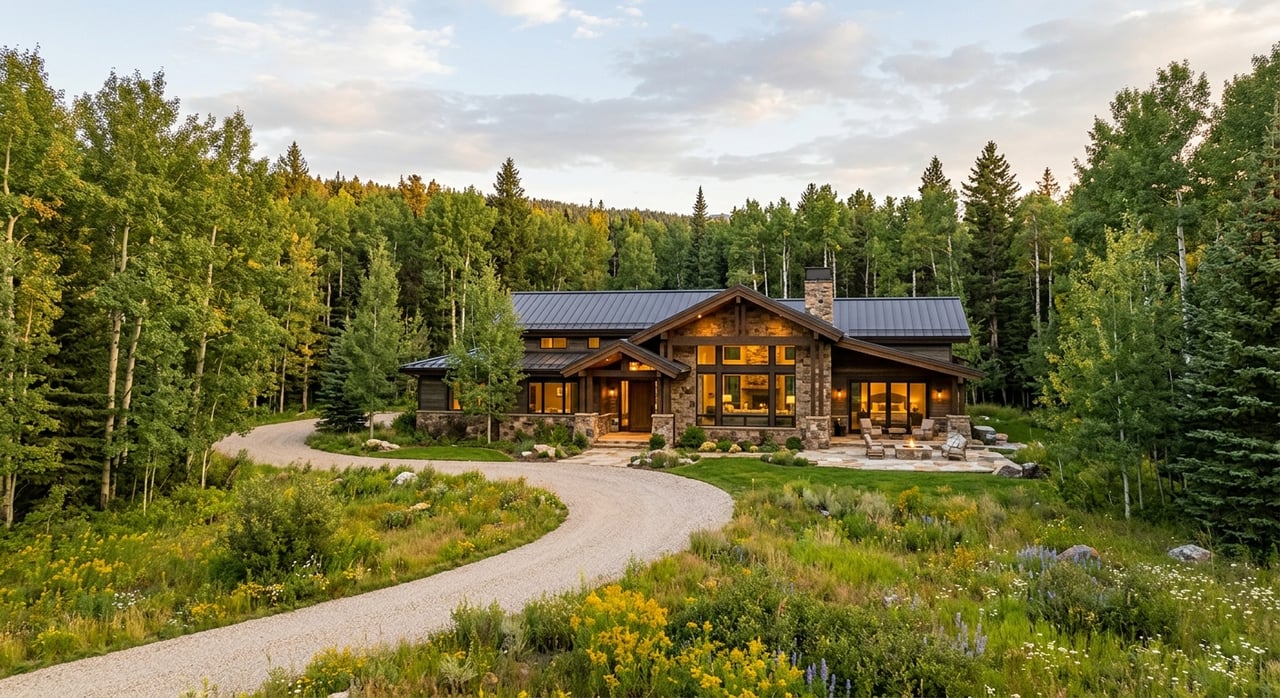
The setting is often described as meadow and forest terrain with strong Wilson Peak views. Because the lots are larger and the built environment is more spread out, Elk Run tends to read as more open and less visually busy. If views, elbow room, and a quieter arrival matter most to you, that distinction can be meaningful.
The daily rhythm is also a little more tucked away. Elk Run is about a 10-minute drive to the Telluride Ski Resort and about 15 minutes to the Town of Telluride. It still offers practical access, but the tradeoff is a slightly more removed feel that many buyers actively want.
Ski Ranches: Woods, Trails, and Established Character
Ski Ranches offers a different kind of mountain lifestyle. It is one of the original single-family neighborhoods in the area, according to the official HOA, and today it remains a broad, established residential community. With 200 lots and homesites generally ranging from 1 to 3 acres, it provides a more traditional neighborhood footprint than Elk Run.
The setting is heavily wooded, and views can vary significantly from lot to lot. That tree cover helps create a classic alpine feel, and the neighborhood’s location next to National Forest and Mountain Village adds to its outdoor appeal. Public descriptions also note trail access, which contributes to a more lived-in mountain residential atmosphere.
In practical terms, Ski Ranches is only a few minutes from the resort. That closer-in feel, paired with more neighbors and a more established layout, often appeals to buyers who want a residential setting with strong day-to-day functionality. It is less about estate-scale openness and more about being part of a well-established mountain enclave.
Comparing Lot Size and Density
Lot size is one of the clearest ways to separate these two neighborhoods. In Elk Run, homesites typically span 4 to 8 acres. In Ski Ranches, homesites are generally 1 to 3 acres.
That difference changes more than just property lines on a survey. Larger lots can create a stronger sense of separation between homes, wider view corridors, and a more expansive estate feel. Smaller, though still substantial, lots can support a more connected neighborhood environment with a stronger sense of overall community presence.
If your top priority is space and privacy, Elk Run has the edge. If you want a wooded residential setting with more established neighborhood structure, Ski Ranches may feel more intuitive.
Views and Overall Setting
For many Telluride-area buyers, setting is the deciding factor. Elk Run is often associated with meadow-and-forest terrain and standout Wilson Peak views. The landscape tends to feel more open, which can make homesites feel dramatic and calm at the same time.
Ski Ranches, by contrast, is defined more by tree cover and variation. The neighborhood is heavily wooded, and views depend more on the individual lot. Some buyers love that layered forest character because it feels private, grounded, and distinctly alpine.
Neither setting is better in an absolute sense. It comes down to whether you picture yourself in a more open, estate-like mountain environment or in a more wooded neighborhood with immediate trail-oriented appeal.
HOA Style and Neighborhood Rhythm
HOA structure can shape your ownership experience, especially in mountain communities where infrastructure and land stewardship matter. Elk Run’s public HOA materials emphasize governing documents, water regulations, and a 2023 fifth amendment that added a dwelling-size limitation. Its declaration also outlines open-space and recreation areas that may include tennis courts, wells, storage tanks, and related facilities.
That suggests a small HOA with a hands-on role in both design oversight and common-area infrastructure. Older HOA minutes also reference maintenance tied to tennis courts, trails, brush cutting, and water systems. In a small enclave, those details often translate into a closely managed neighborhood environment.
Ski Ranches has a more visibly expansive public HOA presence. Its portal includes board information, committees, rules, trails maps, wildfire mitigation details, records forms, and a short-term rental policy. Rules-at-a-glance also highlight parking restrictions, bear-proof trash handling, tree-removal and construction review, county road plowing, and HOA-provided fire hydrants.
For you as a buyer, the difference is less about which HOA is better and more about which style fits your expectations. Elk Run feels more intimate and estate-oriented. Ski Ranches feels more structured and broad-based, with systems that reflect a larger neighborhood footprint.
Access to the Resort and Town
Both neighborhoods offer convenient access to the Telluride area, but there is still a meaningful difference in drive time. Elk Run is roughly 10 minutes from the Telluride Ski Resort and about 15 minutes from the Town of Telluride. Ski Ranches is described as only a few minutes from the resort.
If you expect frequent resort trips, that shorter drive from Ski Ranches may stand out. If your priority is a more secluded setting and a little more separation from activity, Elk Run may feel worth the extra few minutes. In either case, both neighborhoods function well for buyers who want a private residential base near Mountain Village rather than a resort-front address.
Which Neighborhood Fits You Best?
If you are drawn to large acreage, fewer neighbors, open meadow-and-forest surroundings, and notable Wilson Peak views, Elk Run may be the stronger match. It is the neighborhood to consider when privacy and estate-scale living sit at the top of your list. The smaller lot count and lower density give it a more exclusive and more tucked-away feel.
If you prefer a wooded setting, quick resort access, trail connections, and the structure of a larger established neighborhood, Ski Ranches may fit better. It offers a more community-oriented residential experience while still delivering privacy through lot size and tree cover. For some buyers, that combination feels practical, comfortable, and immediately usable.
A helpful way to think about the choice is this:
- Choose Elk Run if you want more acreage, more separation, and a more open estate-like setting.
- Choose Ski Ranches if you want a woodsy neighborhood feel, trail access, and a more established residential framework.
A Smart Way to Narrow the Decision
When two neighborhoods are both strong options, the best next step is to compare them through your real priorities. Start by ranking what matters most to you, such as lot size, tree cover, open views, resort drive time, or HOA structure. Once you know your top three criteria, the choice usually becomes clearer.
It also helps to think beyond the first showing. Ask yourself how you want the property to feel in every season, how often you expect to head to the resort, and whether you want your home to feel more like a private retreat or part of an established mountain neighborhood. In this part of San Miguel County, those subtle differences matter.
If you are weighing Elk Run against Ski Ranches, a tailored neighborhood tour can make the contrast immediately obvious. For discreet, high-touch guidance on Telluride-area homes and homesites, connect with The Agency Telluride.
FAQs
What is the main difference between Elk Run and Ski Ranches?
- Elk Run is a smaller, lower-density neighborhood with homesites generally ranging from 4 to 8 acres, while Ski Ranches is a larger, more established neighborhood with homesites generally ranging from 1 to 3 acres.
Is Elk Run or Ski Ranches ski-in/ski-out?
- Neither neighborhood is presented as ski-in/ski-out. Both function as car-based residential areas with short drives to the Telluride Ski Resort.
Which neighborhood offers more privacy near Mountain Village?
- Elk Run is generally the more privacy-focused option because it has about 30 lots and larger homesites that create more separation between residences.
Which neighborhood has more trails and wooded character?
- Ski Ranches is the more heavily wooded neighborhood and is noted for trail access connected to its location near National Forest and Mountain Village.
How far is Elk Run from the Telluride Ski Resort?
- Elk Run is about a 10-minute drive to the Telluride Ski Resort and about 15 minutes to the Town of Telluride.
What kind of buyer usually prefers Ski Ranches?
- Ski Ranches may suit a buyer who wants a more established mountain neighborhood, closer resort access, more neighbors nearby, and a residential setting with trails and active HOA structure.