If you are looking at new construction in Mountain Village, you are probably weighing more than just finishes and floor plans. You want to know where new inventory is actually appearing, how it compares with older properties, and what ownership details matter before you commit. In a market this specialized, those answers can shape both your lifestyle and your long-term value. Let’s dive in.
Where new construction is happening
New construction in Mountain Village is relatively limited, and it tends to be concentrated in a few key areas. Current town information points to activity in the Village Center, along the Aspen Ridge corridor near the gondola, and on select infill streets throughout town.
That matters because Mountain Village is not seeing broad new subdivisions in the way some other resort markets do. Instead, much of the current pipeline appears to be made up of focused luxury projects, lot-specific homes, redevelopments, and smaller planning applications.
Village Center projects
One of the biggest projects in the market is the Four Seasons Private Residences and Hotel in Mountain Village Center. According to town materials, this development includes 28 private residences, 41 hotel residences, and 52 hotel rooms.
For buyers, that signals a meaningful addition to the core, but it also highlights an important distinction. Not every new residence in a major hospitality project functions the same way as a traditional standalone condo or single-family home.
Aspen Ridge activity
The Aspen Ridge corridor is another notable area for new luxury product. Highline at 98 Aspen Ridge Drive is a 16-residence slopeside project near the gondola and the Village Center.
This location appeals to buyers who want a close connection to skiing, village access, and newer amenity packages. It also reflects the kind of smaller-scale, high-end development that currently defines much of Mountain Village new construction.
Infill and custom-home development
Beyond those headline projects, the town’s current planning activity shows a steady stream of smaller residential proposals. Addresses listed in town planning materials include locations on Adams Way, San Joaquin Road, Lost Creek Lane, Pennington Place, Benchmark Drive, Adams Ranch Road, and Cortina Drive, among others.
The takeaway is simple: a large share of what remains to be built in Mountain Village is likely to come through infill lots, custom homes, and targeted redevelopment. If you are waiting for a wave of mass-market new inventory, that is not what this market currently suggests.
Not all new inventory is the same
One of the most important things to understand is that recent construction volume does not always translate into free-market buying opportunities. Meadowlark, for example, is a 29-unit employee housing neighborhood. It shows that building activity is happening, but it is not the same as luxury inventory available to the broader buyer pool.
That distinction can be easy to miss if you are browsing by headline alone. In Mountain Village, the term new construction can cover private residences, hotel residences, employee housing, and condo products with very different use rules.
What new construction looks like
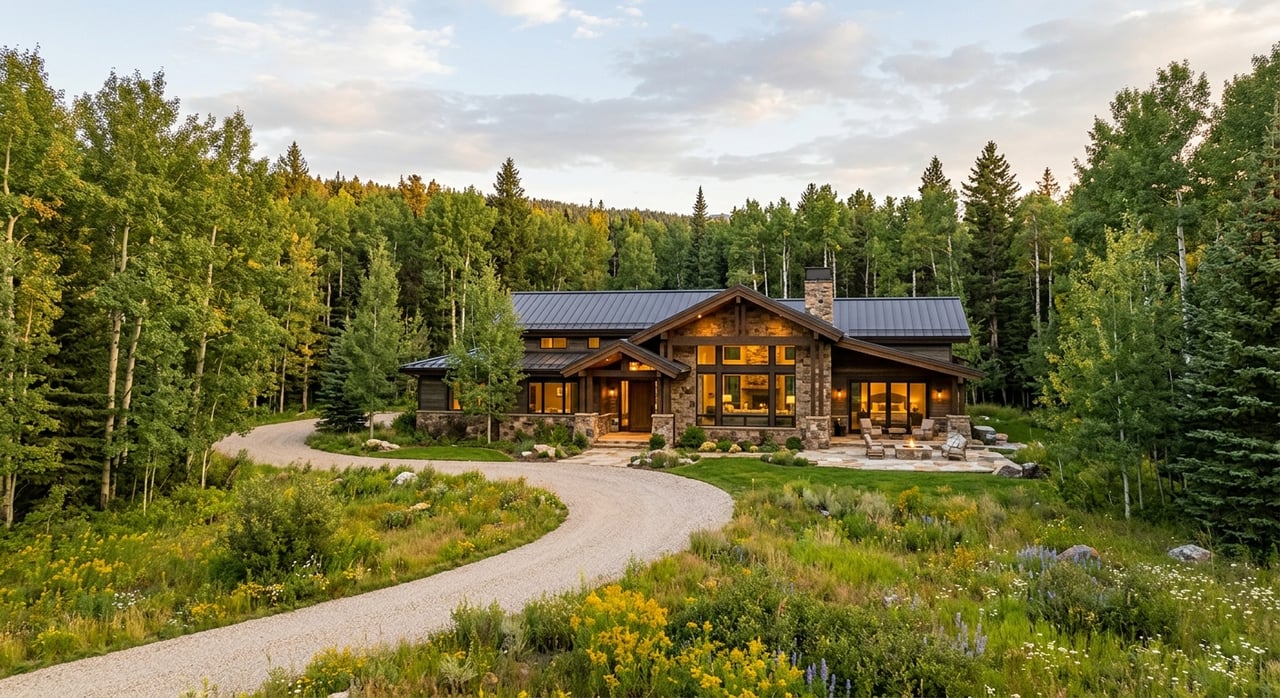
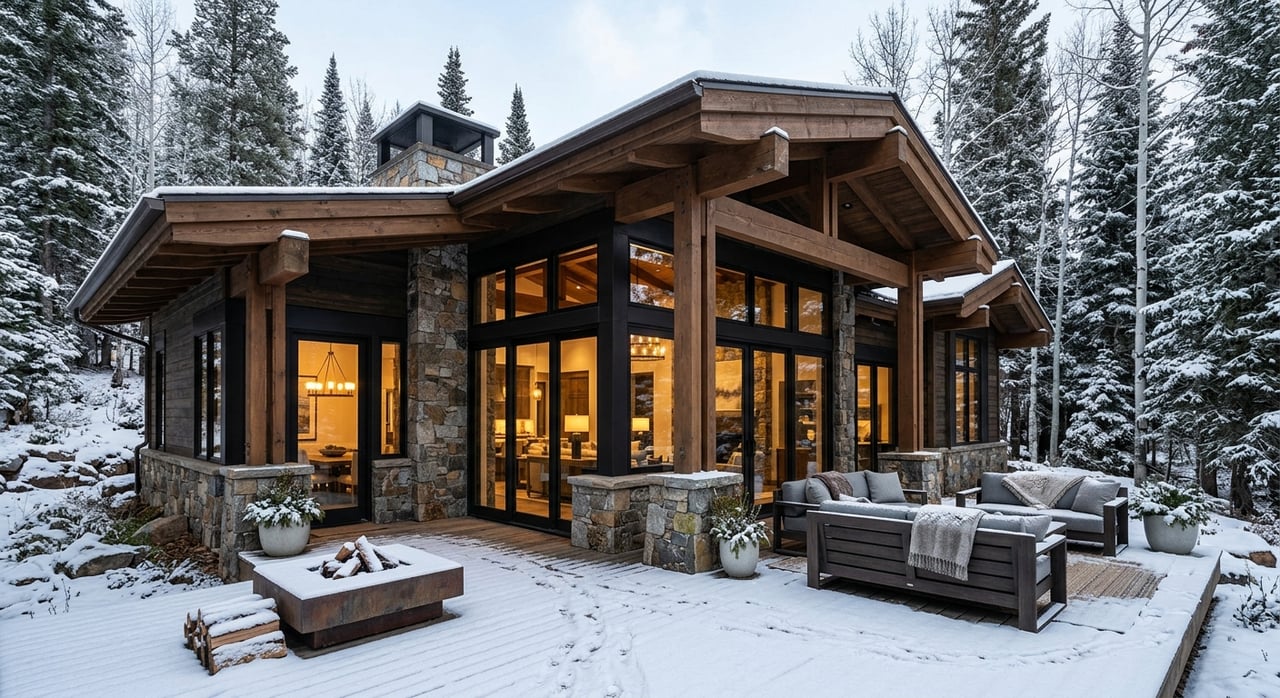
Mountain Village has a strong architectural identity, and town standards are designed to preserve it. The design review framework calls for a mountain vernacular that fits the alpine setting, with exterior materials that are compatible with surrounding development and appropriate for the climate.
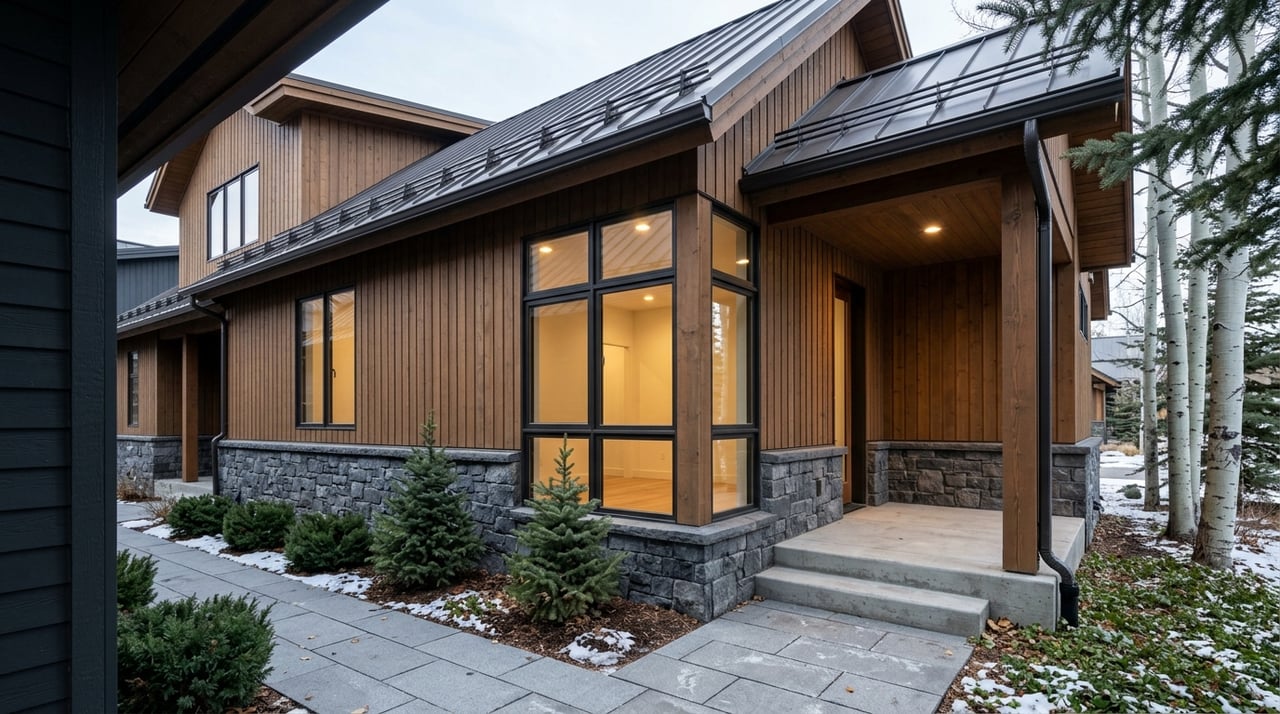
Approved material palettes can include stone, wood, metal, stucco, and certain synthetic or cementitious materials that meet design and fire standards. In the Village Center, roofing guidance is also specific, with town materials pointing to earth-tone-compatible materials, dark standing-seam or bonderized metal, zinc, burnt-sienna concrete tile, brown pre-patina copper, and non-reflective solar roof tiles.
Interior style and amenities
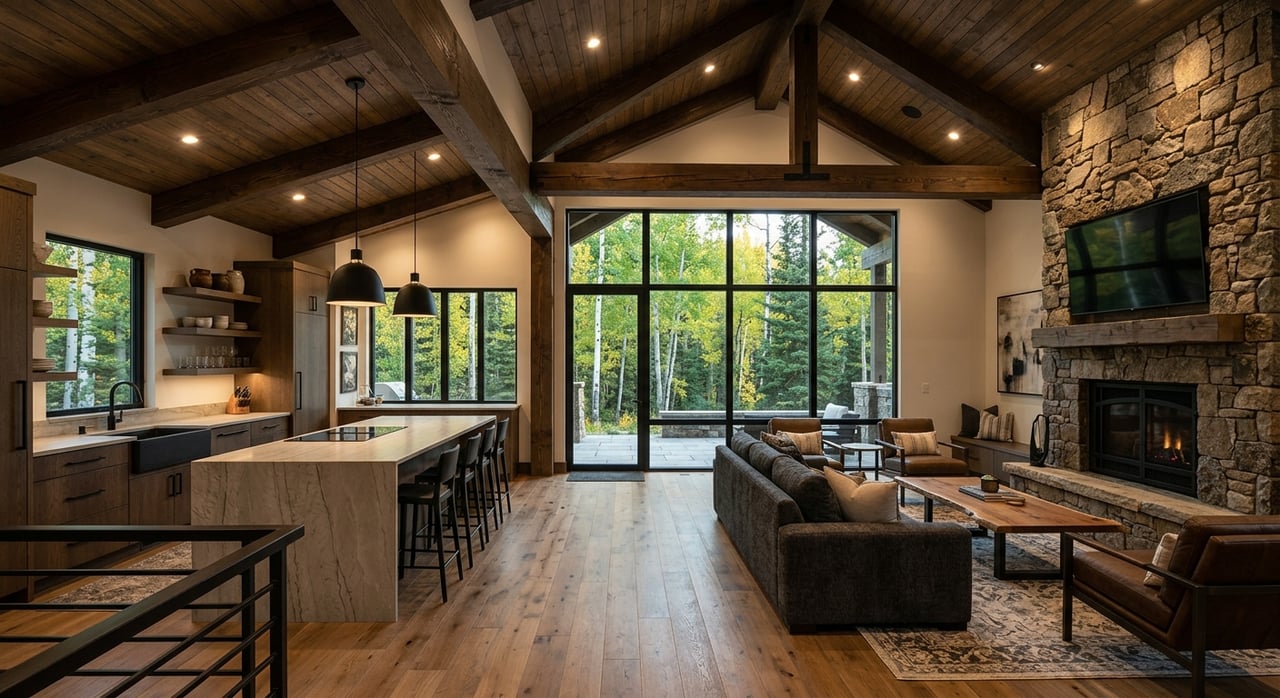
In newer luxury product, the design language leans contemporary and amenity-driven. Highline marketing and listing information references features such as in-floor heat, heated garage access, elevators, ski storage, and mountain views.
Shared amenities can also be part of the value equation. In that same project, current materials emphasize a hot tub deck, outdoor patio, fitness center, and bike storage. For many buyers, these conveniences are part of why new construction commands a premium.
How pricing compares with older homes and condos
Mountain Village is an expensive market, and new construction sits at the upper end of it. Realtor.com currently shows the town with a median listing price in roughly the $4.1 million to $4.3 million range, with pricing around $1,700 to $1,800 per square foot depending on the page and date.
New-home pages for Mountain Village show median pricing around $4.25 million, while separate new-construction search results place the median just under $4.0 million. Those figures suggest that new inventory is very much part of the luxury tier, even before you account for location and views.
The price spread is wide
Current condo listings show how broad the pricing range can be. Older inventory includes smaller 1992-built studio product at 136 Country Club Drive listed from $405,000 to $799,000, along with a 1994-built Lost Creek condo listed at $1.475 million.
By comparison, newer or newly built offerings include residences such as 95 Aspen Ridge Drive Apt 6 at $5.39 million, 98 Aspen Ridge Drive Unit 203 at $5.825 million, 98 Aspen Ridge Drive Unit 304 at $5.275 million pending, 115 Cortina Drive Unit B at $9.5 million, and a pending new-construction residence at 680 Mountain Village Boulevard Unit 918N at $24.164 million.
That does not mean every older property is a value buy or every new property is overpriced. It does show that buyers are often paying a substantial premium for new-build condition, updated systems, modern layouts, and amenity-rich ownership experiences.
What to verify before you buy
In Mountain Village, due diligence on new construction goes well beyond cabinets and countertops. The town uses 12 zoning designations, including seven condo-related designations with different rules tied to use, configuration, parking, and person-equivalent calculations.
Some designations are also limited to employees or short-term-accommodation uses. That means a property described as a new condo, lodge, hotel residence, or employee unit may come with very different rights and limitations.
Confirm zoning and use
Before you move forward, make sure you understand exactly how the property is classified. Ask how that classification affects occupancy, rental use, ownership structure, and future resale.
This step is especially important in a resort setting where the differences between residential, lodging, and restricted-use product can be significant. A polished presentation should never replace a careful review of the actual designation.
Review the permit and planning trail
The town’s planning resources show that applications move through OpenGov and can involve owner or agent authorization, HOA input where applicable, roof-plan details, wildfire-related site planning, and mapping for slopes, wetlands, and utilities. If you are considering a newly completed home or a residence still under construction, it is worth reviewing that trail.
If you hope to remodel or expand after closing, this becomes even more important. Mountain Village’s Design Review Board reviews new structures, remodels, landscaping plans, signs, and other architectural matters.
Understand alpine construction requirements
Mountain conditions bring real design and maintenance considerations. Town materials state that new construction requires a wildfire mitigation plan, and planning standards can include details such as roof drainage, snow management elements, and fire-mitigation offsets in landscaping.
The town is also tightening exterior lighting rules to reduce light pollution and light trespass, with new regulations intended to apply to new buildings going forward. In the Village Center, even reroofing may trigger project-specific review, so it is smart to confirm whether a property sits within the core and what that may mean for future work.
Think about nearby construction timing
In an active resort market, your ownership experience can be affected by what is being built next door or nearby. For example, the Four Seasons project has stated that excavation is expected to increase traffic for about 18 months, and overall construction is expected to last three to four years.
If peace, access, and timing are priorities for you, ask about the current and planned construction environment around any property you are considering. That context can be just as important as the residence itself.
What this means for buyers
The new-construction market in Mountain Village is best approached as a limited, highly segmented opportunity set. You are not choosing from a broad field of interchangeable new homes. You are evaluating a small number of distinctive offerings, each shaped by location, zoning, project structure, design review, and amenity package.
That can be a real advantage if you want something current, turnkey, and tailored to resort living. It also means that careful property-level analysis matters, because the differences from one new opportunity to the next can be substantial.
For buyers who value modern design, newer systems, and a more lock-and-leave ownership experience, new construction can offer a compelling fit. The key is understanding what you are buying beyond the finish level, and how that asset sits within the broader Mountain Village market.
If you want a discreet, data-driven read on current new-construction opportunities in Mountain Village, The Agency Telluride - Main Site can help you evaluate the market with local insight and tailored guidance.
FAQs
What areas have the most new construction in Mountain Village?
- Recent construction has been concentrated in Mountain Village Center, the Aspen Ridge corridor near the gondola, and select infill streets such as San Joaquin Road, Lost Creek Lane, Adams Ranch Road, Benchmark Drive, and Pennington Place.
What should buyers know about new condo and hotel residence zoning in Mountain Village?
- Mountain Village has multiple condo-related zoning designations, and some properties may have different rules for use, occupancy, parking, or ownership structure, so buyers should confirm the exact classification before purchasing.
How does new construction pricing compare with older properties in Mountain Village?
- Current market examples show that new or newly built residences often command a meaningful premium over older condos, largely due to newer systems, contemporary design, and amenity offerings.
What architectural style is common in new Mountain Village construction?
- Town standards support a mountain vernacular suited to the alpine setting, while many newer luxury residences pair that exterior character with contemporary interiors and modern amenities.
What due diligence matters most when buying new construction in Mountain Village?
- Buyers should verify zoning, use restrictions, planning and permit history, wildfire mitigation requirements, exterior lighting rules, HOA considerations if applicable, and the impact of nearby active construction.